Foundation Crack Repair vs. Full Foundation Repair For Homes in Columbus
When it comes to maintaining the safety and value of your home, your foundation plays a crucial role. In Columbus, Ohio, where seasonal temperature swings and soil conditions can be tough on homes, noticing cracks or shifts in your foundation is not uncommon. But when should you consider a simple foundation crack repair, and when is a full foundation repair necessary? Understanding the difference can save you stress, money, and future headaches.
In this guide, we’ll walk through what each type of repair involves, the signs to watch for, and how to make the right choice for your property.
Why Foundation Issues Happen
Foundations are built to last, but a combination of soil movement, water intrusion, and time can lead to problems. In Columbus, expansive clay soils are common, and these soils can expand when wet and contract when dry. This movement can stress your foundation and cause:
- Small hairline cracks in walls or floors
- Bowed or leaning walls
- Uneven floors
- Doors and windows that stick or won’t close properly
While some cracks are harmless cosmetic issues, others indicate deeper structural problems that need professional attention.
What Is Foundation Crack Repair?
Foundation crack repair is a targeted approach designed to fix localized cracks or minor leaks in your foundation. It’s typically less invasive and less expensive than full foundation repair, making it a practical first step when issues are caught early.
Common Methods for Crack Repair
- Epoxy Injection
- A strong resin is injected into cracks to seal them and restore structural integrity.
- Ideal for dry cracks that are not actively expanding.
- Polyurethane Foam Injection
- This expands to fill cracks and stops water infiltration.
- Useful for leaks or moisture-related cracks.
- Carbon Fiber Straps
- Applied to walls with horizontal cracks or minor bowing.
- Provides additional support without major excavation.
Pros and Cons of Crack Repair
Pros:
- Cost-effective for minor issues
- Quick to complete
- Minimal disruption to your home
Cons:
- Only suitable for small, stable cracks
- Does not address the underlying soil or foundation movement
- May require future repairs if issues worsen
Foundation crack repair is best when the problem is contained, the crack is small, and there are no signs of ongoing structural movement.
What Is Full Foundation Repair?
Full foundation repair addresses major structural problems affecting the stability of your home. This isn’t just about filling cracks; it’s about correcting the underlying cause, such as soil shifting, water damage, or foundation settlement.
Common Techniques for Full Foundation Repair
- Piering or Underpinning
- Steel or concrete piers are installed beneath the foundation to stabilize and lift the structure.
- Works well for settling or sinking foundations.
- Wall Anchors
- Steel anchors are installed outside to pull bowing walls back into position.
- Often used when basement walls are leaning inward.
- Slab Jacking or Mudjacking
- Lifting a sinking concrete slab by injecting grout underneath.
- Can level floors and prevent further cracks.
Pros and Cons of Full Foundation Repair
Pros:
- Corrects root causes of foundation damage
- Long-lasting and more permanent solution
- Improves overall home stability
Cons:
- Higher cost than crack repair
- More invasive and time-consuming
- May require professional structural engineers
Full foundation repair is typically necessary when you see signs of major structural compromise, like uneven floors throughout the home, wide or expanding cracks, or leaning walls.
Signs You May Need Foundation Crack Repair
Not all cracks are a cause for panic, but there are clear signs that professional attention is needed:
- Hairline cracks less than 1/4 inch wide in a single area
- Water seeping through basement cracks
- Small cracks that have appeared recently after a heavy rain
If you notice these, addressing them early with crack repair can prevent further damage and preserve your home’s integrity.
Signs You May Need Full Foundation Repair
When the problem is more severe, a full foundation repair may be the best course of action:
- Walls bowing inward or outward
- Cracks wider than 1/2 inch
- Floors that slope or feel spongy
- Windows or doors sticking or misaligned throughout the house
- Cracks that continue to grow despite previous repairs
These are signs of ongoing movement or settling that a simple crack repair cannot fix. Acting quickly can prevent more costly damage down the line.
How to Decide Between Crack Repair and Full Foundation Repair
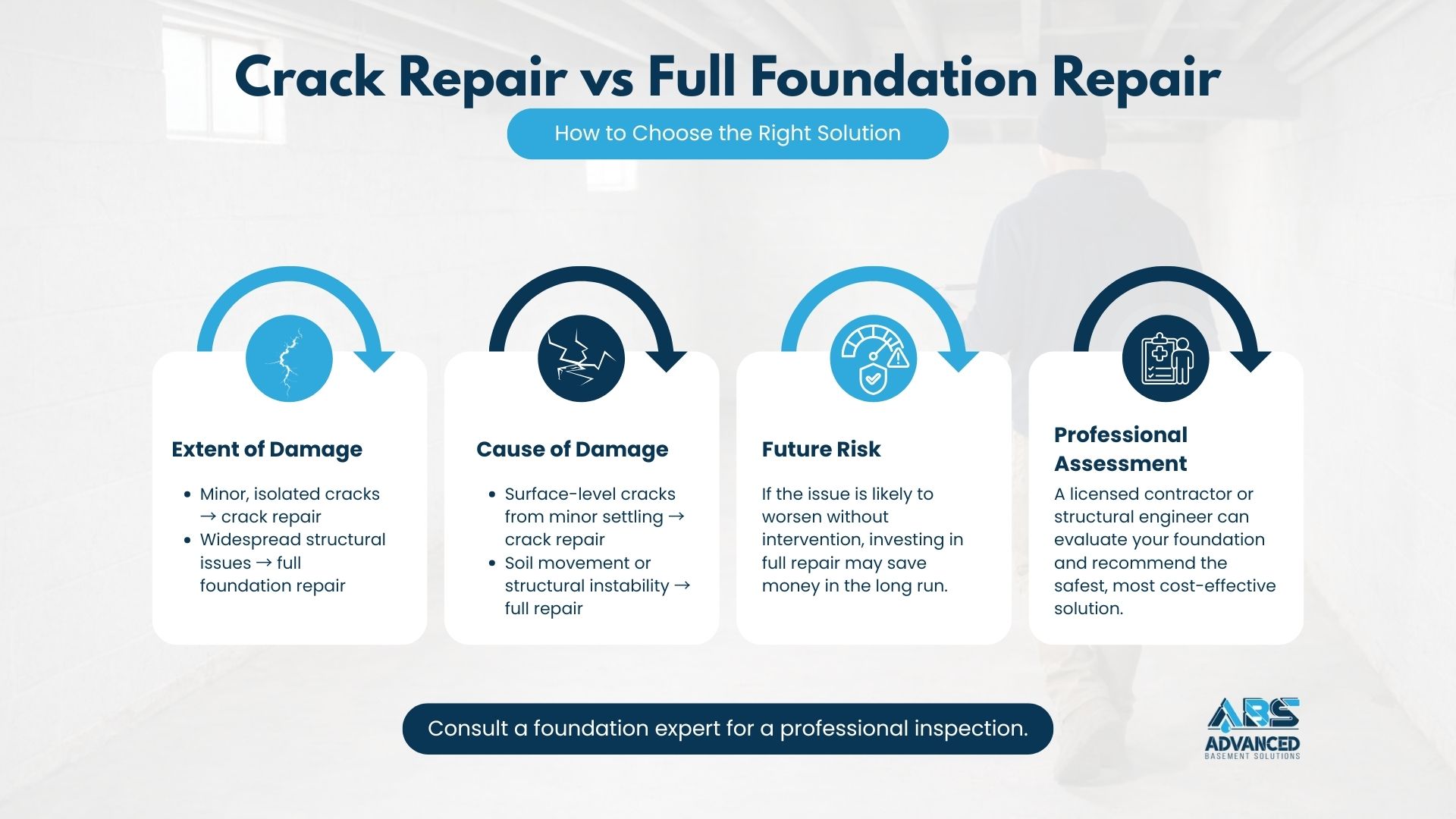
Choosing the right repair depends on several factors:
- Extent of Damage
- Minor, isolated cracks → crack repair
- Widespread structural issues → full foundation repair
- Cause of Damage
- Surface-level cracks from minor settling → crack repair
- Soil movement or structural instability → full repair
- Future Risk
- If the issue is likely to worsen without intervention, investing in full repair may save money in the long run.
- Professional Assessment
- A licensed contractor or structural engineer can evaluate your foundation and recommend the safest, most cost-effective solution.
Costs to Consider
While costs vary based on home size, damage extent, and method chosen, here’s a general idea:
- Foundation Crack Repair: $300–$1,500
- Full Foundation Repair: $5,000–$25,000+
The higher cost of full repair reflects its long-term benefits and the structural security it provides.
Prevention Tips to Protect Your Foundation
Even after repairs, taking steps to maintain your foundation can help avoid future issues:
- Keep gutters and downspouts clean and direct water away from the foundation
- Maintain consistent soil moisture near your foundation
- Avoid planting large trees too close to the home
- Schedule regular inspections to catch problems early
Preventive care can extend the life of your foundation and reduce costly repairs over time.
When to Call a Professional
Foundation problems can be tricky, and the right solution often requires an expert eye. In Columbus, homeowners trust specialists who understand local soil conditions, weather patterns, and building codes. If you’re unsure whether a crack is minor or part of a bigger problem, it’s always safer to schedule a professional evaluation.
Getting a timely assessment not only protects your home but also gives you peace of mind. Companies like ours, Advanced Basement Solutions Ohio, offer evaluations and tailored repair plans to suit both minor and major foundation issues.
Final Thoughts
Foundation problems are serious, but knowing the difference between a crack repair and a full foundation repair can make all the difference. Minor cracks can often be fixed quickly and affordably, while larger structural issues need a comprehensive approach to keep your home safe and secure.
For Columbus homeowners, understanding the signs, weighing costs, and consulting a trusted contractor ensures that your foundation remains stable for years to come. Don’t wait for small cracks to turn into major headaches; taking action early is the best protection for your home and investment.
FAQs
Q1: Can small foundation cracks be ignored?
Small hairline cracks are often cosmetic, but it’s best to have them inspected to rule out underlying problems.
Q2: How long does foundation crack repair take?
Minor crack repairs usually take a few hours to a day, depending on the method used.
Q3: How do I know if my foundation is sinking?
Signs include sloping floors, misaligned doors and windows, and cracks that widen over time.
Q4: Will full foundation repair increase my home’s value?
Yes. Fixing structural issues improves safety, longevity, and resale potential.
Q5: Are foundation repairs covered by insurance?
Coverage depends on your policy and the cause of the damage. Check with your insurance provider.